Family Reunion Vacation Homes: How to Plan a Multigenerational Trip That Actually Works
Booking eight hotel rooms is not a family reunion. Here is how to choose a home that fits three generations, and how home exchange makes the math work.

The hardest part of a family reunion is not the flights or the dates. It is finding one roof that fits three generations without anyone feeling like a guest in a hotel corridor.
Most families default to booking a block of hotel rooms, then spend the week walking between them. Everyone eats out for every meal, the grandparents go to bed at nine while the cousins are still in the lobby, and nobody gets the thing they came for, which is time in the same room doing nothing in particular.
A house solves that. Getting the right house is the work.
Key takeaways
- Count sleeping arrangements, not bedrooms. Twelve people in six bedrooms is comfortable. Twelve people in six bedrooms where four are up a spiral staircase is not.
- The kitchen decides the week. Multigenerational trips run on shared meals, and a kitchen built for one person cooking pasta will not carry a family of fourteen.
- Book eleven to fourteen months ahead for summer and holiday weeks. Large homes are the scarcest inventory in every destination.
- One person holds the calendar. Reunions fail on coordination far more often than on money.
- Home exchange changes the arithmetic. A Collection membership is $1,500 a year with unlimited exchanges, which is a different conversation from eight hotel rooms for a week.
Why hotels struggle with family reunions
Hotels are built around the couple and the business traveler. A family of fourteen breaks every assumption in that model.
You end up on different floors, sometimes in different wings. There is no shared space that belongs to you, so you colonize a corner of the lobby or the pool deck. Every meal is a restaurant decision involving fourteen opinions and a highchair. The five-year-old’s nap and the eighty-year-old’s early night are both nobody’s problem but yours.
Cost compounds quietly too. Eight rooms at a resort rate for seven nights, plus every breakfast, plus resort fees, adds up to a number most families do not total until afterward.
A single house inverts all of it. One kitchen, one table, one living room, and the ability for people to peel off to their own corners without leaving the group.
What to look for in a family reunion home
Sleeping arrangements, laid out person by person
Do not shop by bedroom count. Write down every person coming and assign them a bed before you commit to anything.
Specific things that decide comfort:
- Ground-floor bedroom with an adjacent bathroom for grandparents or anyone with mobility limits. This is the single most common oversight.
- Bedrooms that can take a travel cot without blocking the door.
- At least one bedroom away from the main living space so somebody can nap or work.
- Bathroom-to-person ratio. One bathroom per four people is workable. One per six is a queue.
A kitchen that can actually cook for the group
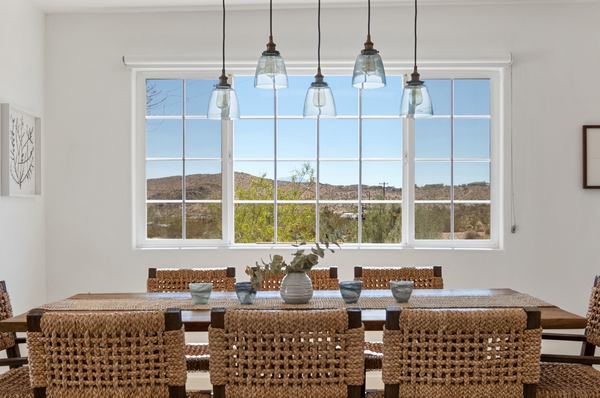
Shared cooking is what turns a house into a reunion rather than a rental. That needs a kitchen with a full-size oven, enough hob space for three pans at once, a dishwasher, and counter space where two people can work without colliding.
Homes that people actually live in tend to be far better at this than rental inventory, for the obvious reason: the owner cooks there. Owner-occupied kitchens have sharp knives, a decent pot, a working coffee setup and a table that seats everyone.
Shared space with an escape route
The best family houses have one large room where everyone naturally ends up, plus two or three smaller spaces where people can go to read, work or hide from a toddler. A single vast open-plan space sounds ideal and is exhausting by day four.
Outdoor space that suits the ages you have
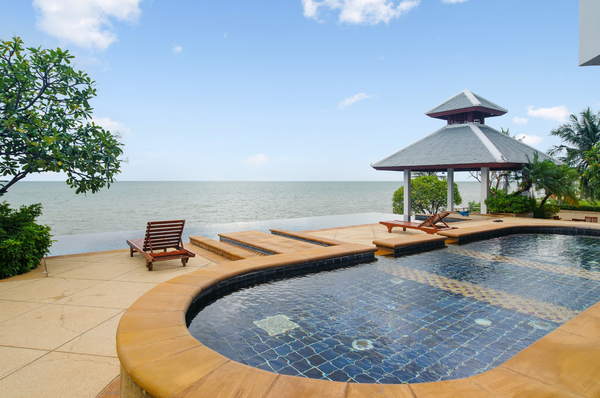
A pool is not automatically an asset with a two-year-old in the group. A flat lawn, shade, and somewhere to eat outdoors usually matter more than a feature.
Location that reduces driving
Pick somewhere with a walkable village, a beach or a town within a short drive. Multigenerational groups fracture fast when every activity requires loading three cars.
How to plan the trip without losing your mind
Twelve months out. Agree the week. This is the hard part and everything else is easy afterward. Pick two candidate weeks and let people vote, rather than opening the whole calendar.
Eleven to fourteen months out. Start looking at homes. Large properties in good locations are the scarcest inventory anywhere, and summer and holiday weeks go earliest.
Six months out. Confirm numbers. Ask directly who is coming and who is not, because the house you need for ten is different from the house you need for sixteen.
Three months out. Book flights together where you can, and agree who arrives when. Staggered arrivals across two days are much easier on the host household than everyone landing at once.
One month out. Plan meals loosely. Two cooked-at-home dinners, one restaurant night, and the rest improvised is the pattern that survives contact with a real family.
One person holds the calendar and the house details. Not a group chat. One person, one document, shared with everyone.
Where home exchange fits
If you own a home that would work for someone else’s family, you are holding the thing that gets you into theirs.
HomeExchange Collection is the private luxury segment of HomeExchange, which the company describes as the world’s largest home-exchange network, with 300,000 members and thirty years of experience. Membership is $1,500 a year and includes unlimited exchanges with other Collection members, with no fee attached to any individual exchange. Homes are selected on design, location and amenities, and every member is verified before exchanging.
For a reunion, the model has two specific advantages.
Large homes are overrepresented. The kind of house that sleeps fourteen is exactly the kind of house that sits empty for long stretches, which is why owners of those homes join exchange networks in the first place.
You are dealing with the owner. You can ask whether the ground-floor room really is on the ground floor, whether the cot fits, and whether the neighbors mind noise at seven in the morning. That conversation is not available through a listing platform.
The mechanics are straightforward. A reciprocal exchange means both members host one another, either at the same time or on different dates. GuestPoints remove the need for a simultaneous exchange, though you still need a host whose available dates align with yours. Members always choose whether to accept a request and which dates they approve.
Getting a large-home exchange accepted
Big houses attract more requests than small ones, so the message matters more.
Lead with the group. Say how many adults and how many children, and their ages. Owners of large homes are not worried about numbers, they are worried about surprises.
Name the dates as a window. “Any week in late June” places far better than one fixed week.
Say what you are offering in the same breath. If your own house sleeps twelve, that is the headline, not a footnote.
Expect to send around ten thoughtful requests for one yes. That is the normal ratio and it reflects calendar matching rather than any judgment of your home.
Ask the practical questions early. Bed configuration, stairs, parking for three cars, whether the pool is fenced. Owners would far rather answer these before you arrive.
Preparing your own home for a family group
If you are hosting a family while you travel, a little practical preparation removes almost every problem before it starts.
Leave a written home guide covering entry instructions, the heating and cooling, the alarm, the wifi, laundry, bin collection days, and who to call if something breaks. Note anything about the house that is not obvious, like a door that sticks or the tap that runs hot for a full minute.
If you have staff, say who they are, when they come and what they do. If there are rooms or cupboards you would rather stay closed, say so plainly. Guests want to be told.
Clear closet and drawer space. A family of twelve unpacking into nothing is the most common complaint in any exchange.
More on this in how to elevate guest experiences in your high-end home and preparing your home for a seamless swap.
Frequently asked questions
What size home do I need for a family reunion? Count people and assign beds before you count bedrooms. As a working rule, allow one bathroom per four people, one ground-floor bedroom if anyone has mobility limits, and at least one room away from the main living space.
How far ahead should I book a family reunion house? Eleven to fourteen months for summer and holiday weeks. Large homes in good locations are the scarcest inventory in every destination, and they go first.
Is a house cheaper than hotel rooms for a large family? Usually, once you count every room, every breakfast and the fees. The bigger difference is that a house gives you shared space and a kitchen, which is what most families actually came for.
Can I use home exchange for a big group? Yes. Large homes are well represented in exchange networks because they are the ones that sit empty most often. Tell the owner your group size and the ages of any children in your first message.
Do all the guests need to be members? No. You arrange the exchange as the member, and your family travels with you.
What if part of the family cancels? Tell your host as soon as you know. Fewer people is rarely a problem, and Collection membership includes coverage of up to $500 per night if a confirmed exchange is cancelled or disrupted on either side.
The takeaway
A reunion works when everyone is in the same house, eating at the same table, with somewhere quiet to go when they need it. That is a property question before it is a travel question, and the homes that fit are the ones people actually live in.
If your own house could hold somebody else’s family for a week, it can also get yours into theirs.
Read also: 9 reasons affluent travelers choose Collection over hotels and rentals · Reciprocal exchanges vs GuestPoints · The first time swap blueprint