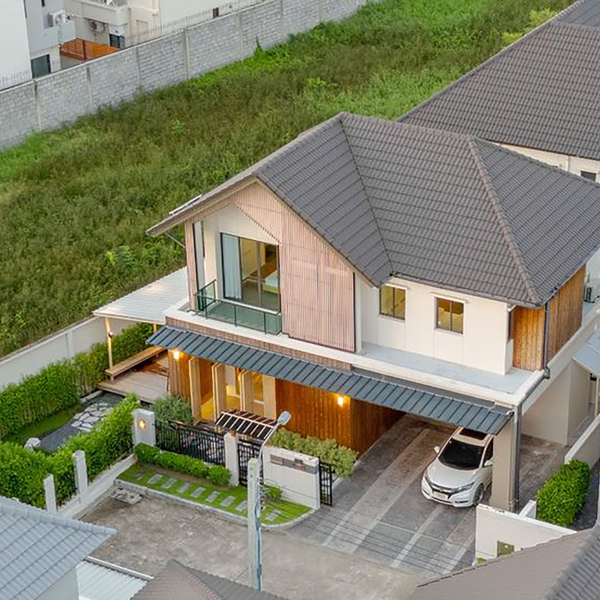
Can You Swap a 2M Home for a 15M Villa: The Truth About Unequal Value Home Exchange
Unequal value home exchanges are becoming more common. This guide explains how platforms balance differences in home value and how homeowners make these swaps work.


A growing number of homeowners are becoming interested in home exchange programs as a way to unlock unforgettable vacations, trading their everyday living spaces for homes in dream destinations across the world.
At its simplest, home exchange allows two homeowners to swap properties for vacation stays, with one party moving into and living in the other party’s house for an agreed period as if it were their own. Instead of paying for hotels or short-term rentals, participants leverage what they already own to access new experiences.
Traditionally, these swaps are based on comparable home values to keep things fair and straightforward. Yet the landscape is shifting. Increasingly, exchanges are taking place between properties that appear wildly unequal on paper.
For example, the idea of exchanging a $2 million home for a $15 million villa sounds like it belongs in clickbait headlines rather than a serious post on real estate or travel. But such uneven exchanges are quietly happening across home exchange networks.
This article breaks down how these exchanges work. We’ll examine how home value is interpreted in swaps, explain the mechanics that enable uneven exchanges, and offer practical advice for making them possible.
Understanding home value in swaps: Temporary relevance matters more than market value
Real estate has conditioned us to think in terms of price per square foot, resale potential, and long-term investment value. In standard property transactions, ownership transfers, legal paperwork is signed, and a contract finalizes the deal. Home exchanges, however, operate very differently. Ownership never changes hands, and long-term asset value becomes irrelevant. Temporary experience takes precedence.
In a swap, the question isn’t “What is this home worth?” but rather “What does staying here allow me to do?” A property’s usefulness during a specific time (its location, availability, and alignment with someone’s needs) can outweigh its actual market price. This shift in perspective explains why a modest home can sometimes hold surprising leverage in an exchange.
Several factors influence the perceived value of a home in a swap. These include:
Location and demand
Location is often the strongest driver of swap value. People aren’t just searching for square footage. They are also searching for experiences. They want to be able to step outside into stories, culture, energy, or breathtaking scenery. Homes in major cities, iconic neighborhoods, and sought-after destinations carry a magnetic pull that far exceeds their market valuation.
For this reason, a modest apartment tucked into a vibrant city center during festival season can feel priceless to the exploring traveler. In contrast, even a luxury villa, no matter how stunning, may struggle to compete if it sits far from activity or demand at that moment in time.
Timing and seasonality
In home exchanges, when a home is available can matter more than its luxury.
Timing turns ordinary spaces into rare opportunities, as a home available at exactly the right moment (such as during a long-awaited holiday, a school break, or a once-a-year event) can feel almost impossible to pass up.
Thus, a property offered during high-demand season holds far more exchange power than the same home listed during off-peak months.
Amenities and lifestyle fit
In home exchanges, amenities have a great impact on value because they don’t just enhance a home but also shape the experience of living in it. The right features can transform a stay from convenient to unforgettable. Think infinity pools that melt into the horizon, floor-to-ceiling windows framing mountain sunrises, private gardens scented with jasmine, or rooftop terraces where evenings stretch long under open skies.
But luxury alone isn’t the deciding factor. What truly elevates perceived value is lifestyle fit. A remote worker may prize a sunlit home office with high-speed internet and quiet mornings over marble countertops. A family might value a safe backyard, a fully stocked kitchen, and proximity to parks more than designer finishes. Couples may seek cozy fireplaces, soaking tubs, or balconies made for slow breakfasts and sunset conversations.
When amenities align perfectly with someone’s way of living, the home feels tailor-made. That sense of “this is exactly what we need right now” raises its perceived value.
Uniqueness and experience
Some homes are more than just places to stay. They’re gateways to experiences that money alone can’t easily buy. Imagine living in a centuries-old townhouse where every creaking floorboard whispers history, or a cliffside villa with panoramic views that stretch from sunrise to sunset, or a property that grants access to niche adventures such as private vineyards, hidden hiking trails, or exclusive art workshops.
These intangible qualities create a sense of magic and exclusivity. They make a stay feel like a story unfolding, rather than just a roof over your head.
In home exchanges, such experiences often outweigh square footage or market value, because they deliver memories and moments that simply cannot be replicated elsewhere.
Overview of the mechanics of unequal exchanges: How home exchanges work when homes aren’t the same value
Swapping homes that are not of equal value may sound like a fantasy, especially when the difference in value is significant (like swapping a modest $2 million home for a sprawling $15 million villa).
But there are practical ways to make the swap feel fair for both parties. The most popular is a point-based value balancing system.
Many home exchange platforms make an unequal-value home exchange work by using points or credits to even out differences in value.
HomeExchange Collection uses a similar system of points called GuestPoints. HomeExchange Collection starts by calculating the value of homes in GuestPoints. Then, during a swap, the system calculates the difference in GuestPoints between the two homes and gives this to the owner of the higher-value property.
For example, if your modest home is valued at 200 GuestPoints and your swap partner's is valued at 500 GuestPoints, your partner will be awarded 300 GuestPoints. Those points become future travel resources, allowing them to stay elsewhere without offering their home or to combine points with their property for an even higher-end stay.
Sometimes, uneven home exchanges are possible through hybrid arrangements and flexible durations.
Hybrid arrangements
This includes evening out the difference in home value by offering complementary experiences like a guided tour, chef service, or concierge access. The two parties can agree on these perks when negotiating the swap, using them to “even out” differences in home value and ensure both sides feel they’re getting an equally memorable experience.
Duration flexibility
This includes plugging the value gap using the length of stay. With HomeExchange Collection, homeowners can earn GuestPoints based on the value of their home per night it’s occupied during a swap. This means that time can make up for differences in property value.
For example, one property valued at 500 GuestPoints might be available for only two days, while a more modest home valued at 200 GuestPoints could be offered for five nights. In this case, the total GuestPoints earned are equivalent, making the swap feel fair and balanced. By adjusting the duration, even properties with very different market values can provide equal benefit.
Also read: Luxury Home Exchange USA Summer 2026: Beat Hotel Prices.
Strategies to make an unequal value home exchange possible
Here are the key strategies that make it possible to swap different-value homes:
- Use point systems to level the playing field: Many home exchange platforms allow homeowners to earn points. When homes do not have the same value, points can be used to balance the difference. For example, if you earn points on your modest home, you may combine these points with your home to arrange a swap for a luxury stay.
- Leverage timing and seasonality: High-demand periods dramatically increase perceived value. Offering your home during peak travel season, festivals, or holidays can make it more attractive, even if it’s smaller or less luxurious. By aligning availability strategically, homeowners can make unequal exchanges feel fair.
- Extend the duration of stay: Time can compensate for differences in property value. Many platforms award points based on the number of nights a home is occupied, allowing longer stays in modest homes to match the value of shorter stays in luxury villas. A five-night stay in a cozy apartment can equal a single night in a high-end villa, creating balance without any money changing hands.
- Offer hybrid arrangements: Complementary perks can tip the scales in your favor. These extras don’t just add value. They create unforgettable experiences that can make both parties feel they’re getting a fair deal.
- Highlight unique features and lifestyle fit: Focus on what makes your home special and how it fits a traveler’s lifestyle. Whether it’s a panoramic view, a quiet garden, proximity to cultural hotspots, or kid-friendly amenities, emphasizing these unique qualities can increase your home’s perceived value. Sometimes, a well-suited modest home can be more desirable than a lavish villa that doesn’t match the traveler’s needs.
Also read: How to Align Luxury Family Exchanges with Florida School Holiday Schedules.
Takeaway: Use your modest home to unlock luxurious vacation villas on HomeExchange Collection
Home exchange offers hope for travelers who want better stays without higher costs. Instead of paying for hotels or short-term rentals, you use your own home to unlock incredible vacation accommodations (at no cost beyond your annual membership). No nightly rates, no hidden fees, just the freedom to stay in real homes around the world.
Plus, you don’t need a luxury property to enjoy luxury stays. Even a modest home can open the door to breathtaking villas in dream locations. HomeExchange Collection’s GuestPoints system makes this possible by evening out differences in home value during unequal swaps. The flexibility allows members to trade smartly, stretch their home’s potential, and experience places that would otherwise be out of reach.
If you’re ready to turn your everyday home into a passport for extraordinary travel, join HomeExchange Collection and discover how far your home can take you, no matter its size or market value.
FAQs
Here are the answers to some questions about home exchange:
What is home swapping?
Home swapping (or home exchange) is a travel arrangement where homeowners temporarily stay in each other’s homes instead of booking hotels or rentals. The exchange can be simultaneous (occurring at the same time) or non-simultaneous (occurring at different times), and often involves no money changing hands. Because members use each other’s homes, you save on accommodation, making it a cost-effective and more personal way to experience a destination.
Note that a home swap is not the same as a property swap, where two parties agree to exchange ownership of property assets instead of buying or selling outright. Hence, capital gain tax does not apply.
How do housing use value and exchange value differ?
Use value refers to how a home serves someone’s needs during a stay, taking into account where it’s located, how comfortable it is, when it’s available, and how well it fits a particular lifestyle. Exchange value, on the other hand, reflects how desirable that home is within a home exchange system, often expressed through points or credits. While exchange value may be influenced by market price, use value is far more personal and situational. In home swapping, use value often outweighs market value, which is why unequal exchanges are possible.
What factors can disqualify a property from participating in a home exchange?
A property may be unsuitable for home exchange if it fails to meet basic safety, cleanliness, or habitability standards. Common factors that can lead to disqualification include unresolved maintenance issues, unsafe structures, restricted access, or rules that prohibit hosting guests (such as certain lease or HOA restrictions). Homes must also meet platform-specific requirements, such as being the main home or a regularly used residence and being accurately represented in listings.
What are the expected etiquette and best practices for house swapping?
Successful home swaps are built on trust and mutual respect. Best practices include clear communication before confirming a swap, honest descriptions of your home, and setting expectations around house rules, cleanliness, and responsibilities. Hosts are generally expected to leave their home clean, provide basic instructions, and respect agreed-upon terms. Guests should treat the home as their own, caring for it responsibly and leaving it in the condition they found it.
Is joining HomeExchange Collection worthwhile?
For travelers who value authentic stays and want access to high-quality homes, HomeExchange Collection can be highly worthwhile. Members gain access to exclusive homes in iconic destinations, including refined residences in London, coastal villas in Southern Europe, and serene escapes in the countryside.
It also offers a GuestPoints system that enables even unequal exchanges, allowing members to use even modest homes to unlock exceptional vacation accommodations around the world, without paying nightly accommodation costs.